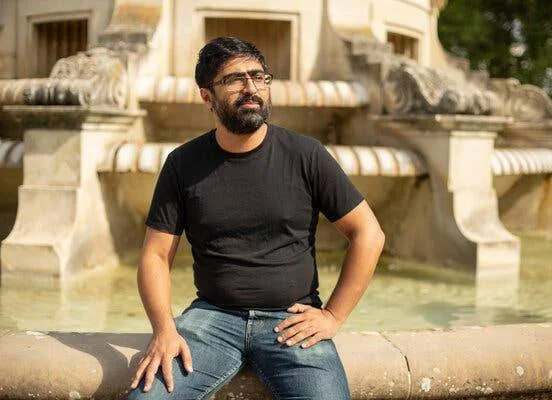
Asad Haider Suicide – Obituary
With heavy hearts, we share the tragic passing of Asad Haider, a brilliant philosopher, teacher, and intellectual whose life was defined by a relentless pursuit of truth and a commitment to radical thought. Born on June 2, 1987, in State College, PA, Asad’s contributions to political theory and his pioneering work in cultural studies have left an indelible mark on both academia and activism. His unexpected death on December 4, 2025, came after a life spent challenging conventional wisdom and illuminating the complexities of social and political movements.
From an early age, Asad demonstrated a deep intellectual curiosity. His childhood was marked by stimulating conversations with his brother, Shuja, and a voracious reading habit. His academic journey was unconventional—he didn’t excel in high school but was nonetheless accepted to Cornell University, where he quickly immersed himself in graduate-level theory. Asad graduated summa cum laude in 2009 and later earned a PhD in the History of Consciousness program at UC Santa Cruz in 2018, with a dissertation that laid the foundation for his lifelong dedication to revolutionary theory and the politics of resistance.
Asad’s work ranged from deep historical investigations into 20th-century revolutionary movements to contemporary political analysis, with particular focus on race, power, and identity. His 2018 book Mistaken Identity was widely praised for its insight into racial injustice, drawing from a rich array of sources from W.E.B. Du Bois to Philip Roth. Asad was particularly influenced by Stuart Hall, and his writing often straddled the worlds of academic scholarship and activism, offering bold interventions in ongoing struggles.
In 2011, Asad co-founded the journal Viewpoint with historian Salar Mohandesi. The journal became a vital space for theorists, activists, and organizers alike, offering original analysis and recovering neglected texts from revolutionary history. Viewpoint helped create a unique space for working-class theorists, and its influence has been lasting, inspiring not only intellectuals but grassroots movements worldwide.
Asad’s academic work, particularly his writing on Louis Althusser and Stuart Hall, has reshaped the way scholars approach politics, culture, and race. He was also a frequent voice in popular media, contributing to The Baffler, n+1, Slate, and other outlets, and he appeared on numerous podcasts, becoming a trusted voice for a new generation of political thinkers.
An Unconventional Life
Asad was known for his multifaceted interests. Outside of academia, he was an accomplished magician, a passionate cook, a dedicated powerlifter, and even a metal music enthusiast. His ability to dive into any subject and master it was one of his trademarks. Asad’s generosity with his time and knowledge, as well as his laughter and warmth, made him a beloved mentor, friend, and teacher.
Above all, Asad considered teaching his highest calling. He was a professor at York University, Toronto, and a former Mellon fellow at Penn State and visiting professor at the New School. His students remember him for his unique approach to teaching, engaging them as equals, and challenging them to think critically about the world. His classroom was one of collaboration and dialogue, where ideas were nurtured and expanded.
Asad’s death has left a hole in the world of philosophy and activism, but his contributions—both in writing and teaching—will continue to resonate. His ability to ask difficult questions, challenge power structures, and build communities of thought will live on.
Asad is survived by his mother, Talat Azhar, and his brother, Shuja Haider. He will be laid to rest beside his father, Jawaid Haider, his first mentor and lifelong inspiration. The funeral service will take place on December 20th at Spring Creek Cemetery, State College, PA, followed by a reception at the Penn Stater Hotel and Conference Center.
As Asad himself once wrote, “All our biographies are unfinished, and will remain so long after we are gone.” His biography is far from finished, and his legacy will continue to inspire thinkers, activists, and teachers for generations to come.